Chapter 1:
An excerpt
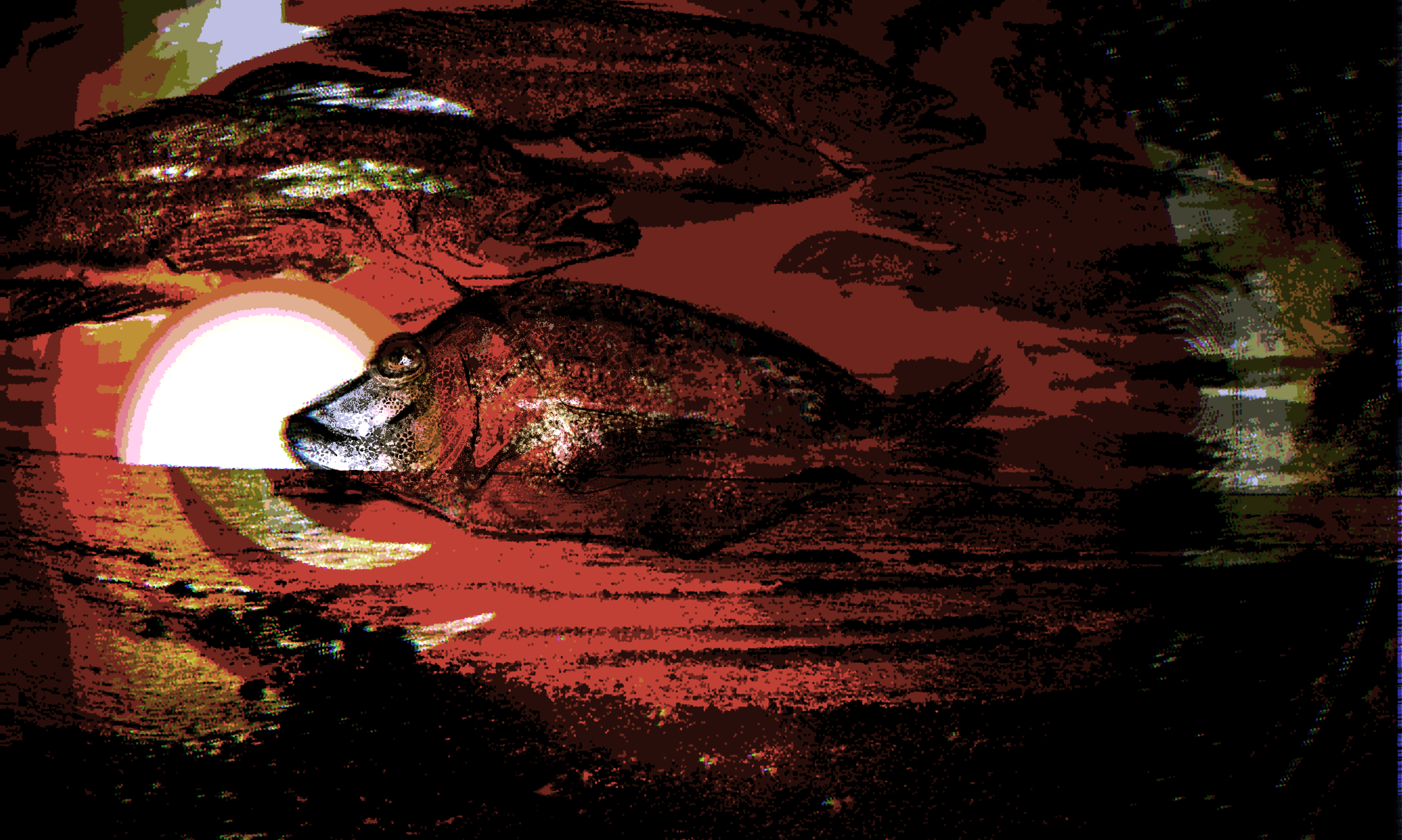
First, the smell of rot. The waves had carried several dead fish towards the shore, lifeless yet full of fresh color. A scatter of maya-maya had made up the reds of their deathbed, while the lapu-lapu followed in hues of orange. Slick, wet scales from the carcasses reflected off light from a distant sunset, forming the apparition of broken glass along the shoreline. A trail of rubies, if not for the smell of death that permeated in the air. By now, that raw stench will have been married to the sea breeze that’s raised me. Years ago, when my father took me to the local market, he made it a habit to point out which fish was first class and expensive, which sort you should fry or steam, and so even in death, the corpses seemed to glisten like jewels on an empty stomach. There’s a certain order to these things, the same way our elders are first in line before any of us hungry children can pick the meat off the fish bones. Follow the death trail, and it won’t be long before your similar acquaintance to the strange order of this island.
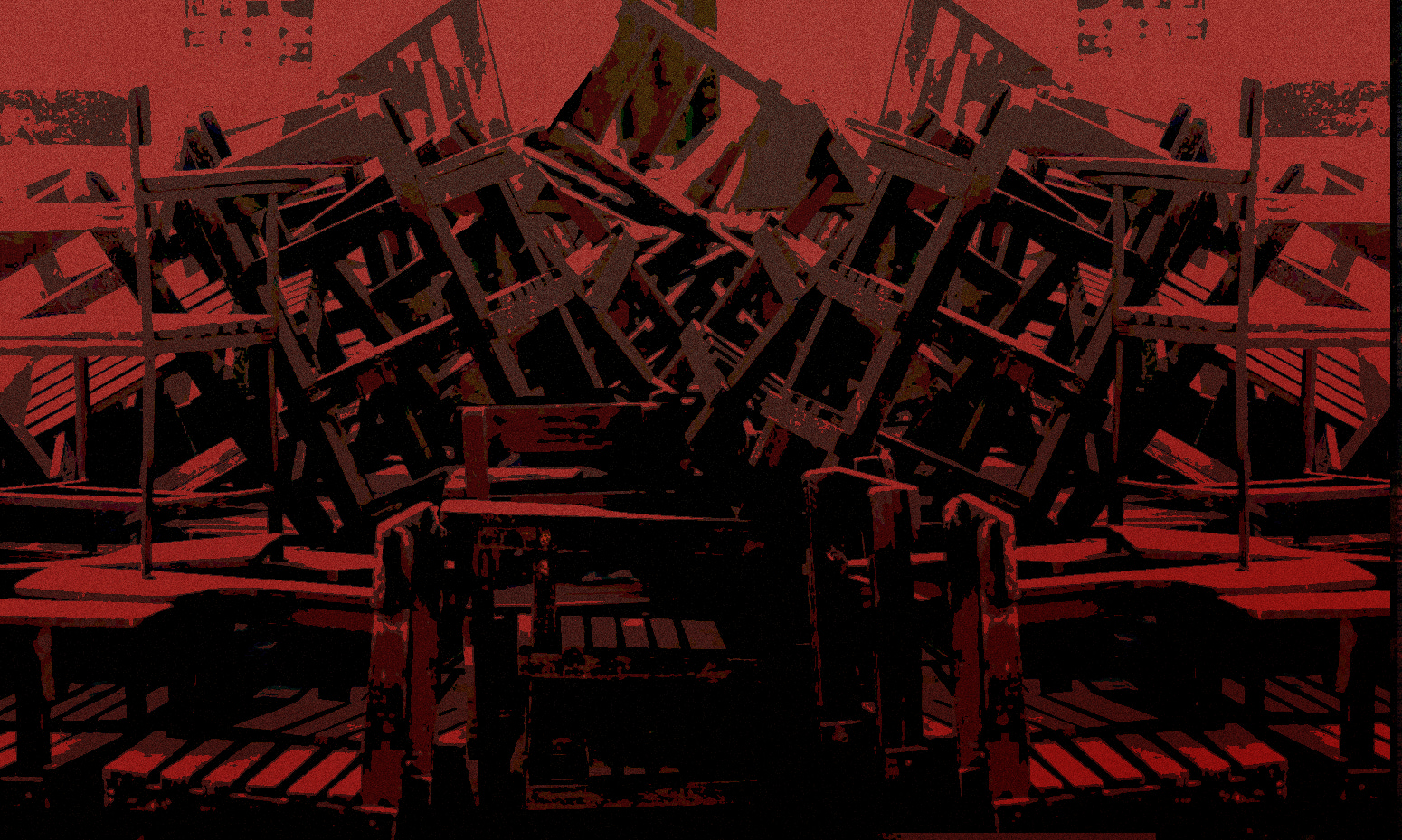
Second, that odd hill down the coast. From a distance, its shape seemed to protrude out of the sand as if its emergence was organic, a blemish that had erupted from a smooth face of dirt. As it stood guard by the shore, its very existence disrupted the image of peace governed by the low-tide sea. It was only during my seventh visit that I’d realize any step closer to this hill, and it would reveal itself to be a mountainous pile of old, wooden armchairs. These school chairs were the same kind we used to scribble on from our very first grade in elementary; a direct upgrade from the small desks we once shared with our kindergarten seatmates. Before its eventual replacement with its plastic equivalent, the mighty, individual armchair was once a ceremonial sign that we would soon learn cursive—thus, stacked so sturdily against each other, the chairs gave the impression of a formidable barricade any child (or adult) would cower from due to its sheer size. It was as if a barrier had quickly been assembled against an approaching enemy, yet whether the adversary had ever arrived would remain a mystery, judging from how intact the pile stood. At the foot of this makeshift fortress were the remains of a later time in my adolescent life: a debris of cardboard posters, slogans, torn pamphlets, flyers from several party coalitions, most of which were my very own work.
This large illustration board in poster paint, I drew as a freshman during the protest under the year of torrential rain. A local would stop me to ask, “Which year would that be? It always rains in Dagit.” But most readers would assume that “the year of torrential rain” is whichever typhoon was disastrous enough to make international headlines. See, news barely escapes cities as little as mine, but natural disasters serve good entertainment to faraway strangers housed in stronger buildings. UltraWide Smart TV screens peer into nipa homes, rustling palm trees, tangled power lines, that specific shade of mud that submerges everything it sees, that color I can’t quite place…brown, green, or red, which was it? Several documents litter my gaze, an interruption to the thought.
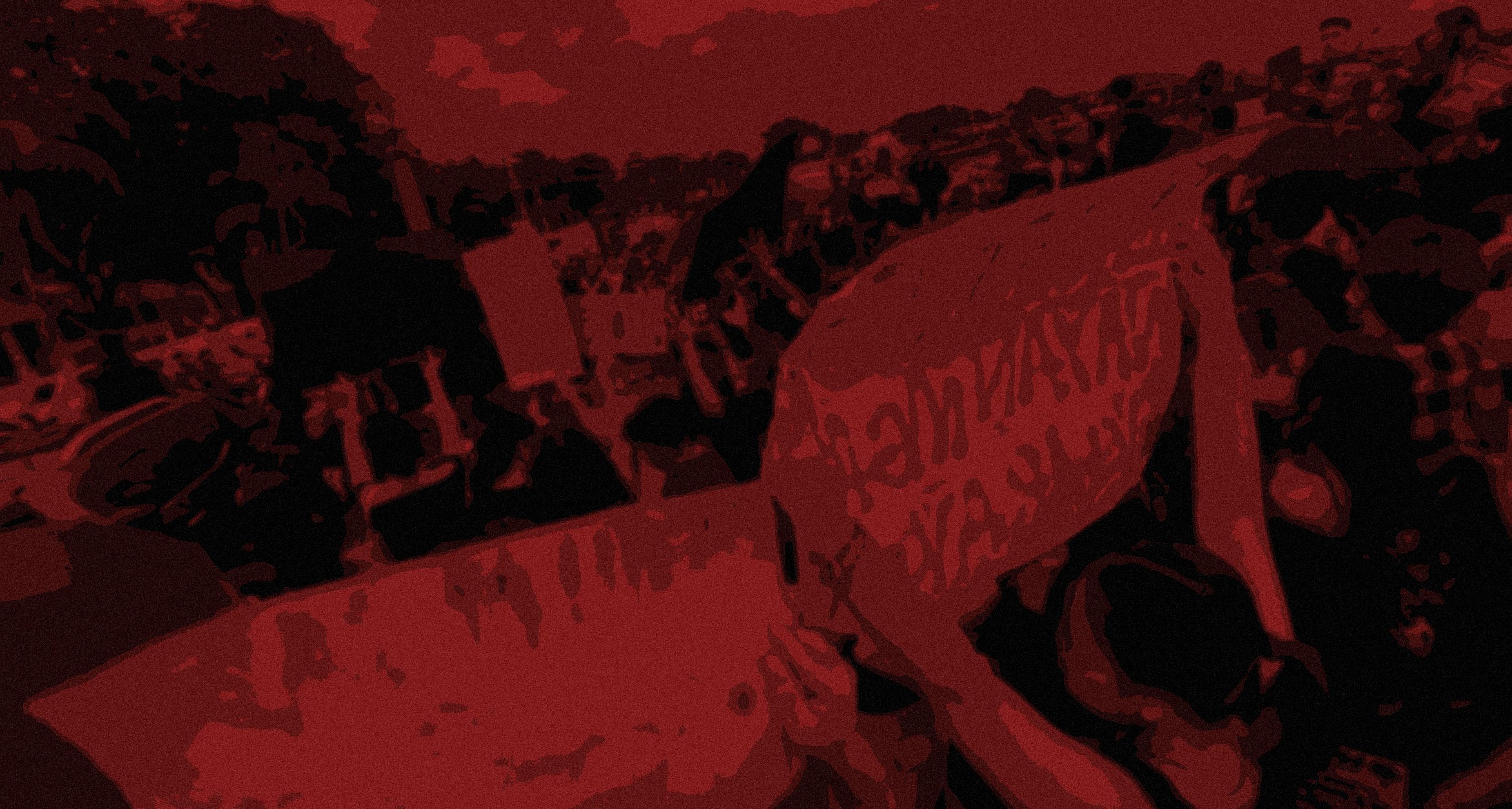
A black flyer in recruitment of university students: “Our poets are dead!”
A protest sign recycled out of an art student’s old canvas, hammered during the passing of the Anti-Terrorism bill.
An election pamphlet for a party-list proposing the increased wages of our nation’s teachers, popularly distributed during the university faculty strike two years ago.
A familiar, old class photo from the infamous year of 1971…but I’m never able to recognize the faces, no matter how hard I try.
An old science fiction zine written during the time our sea was under the threat of a smart city project, entitled “Poblacion Wala: 2031 A.D.”. I caught this during my sophomore year at the annual zine fair, enamored by its writing style and the sense of kindred I felt with its author, whose name was absent. I liked that about the publication, too. It portrayed our hometown in little prose, a small world and its panopticon, strange government drones and plenty cute drawings of fish. But I was too shy to ask who handled the story. I wonder now, why is it that I was always so withdrawn?
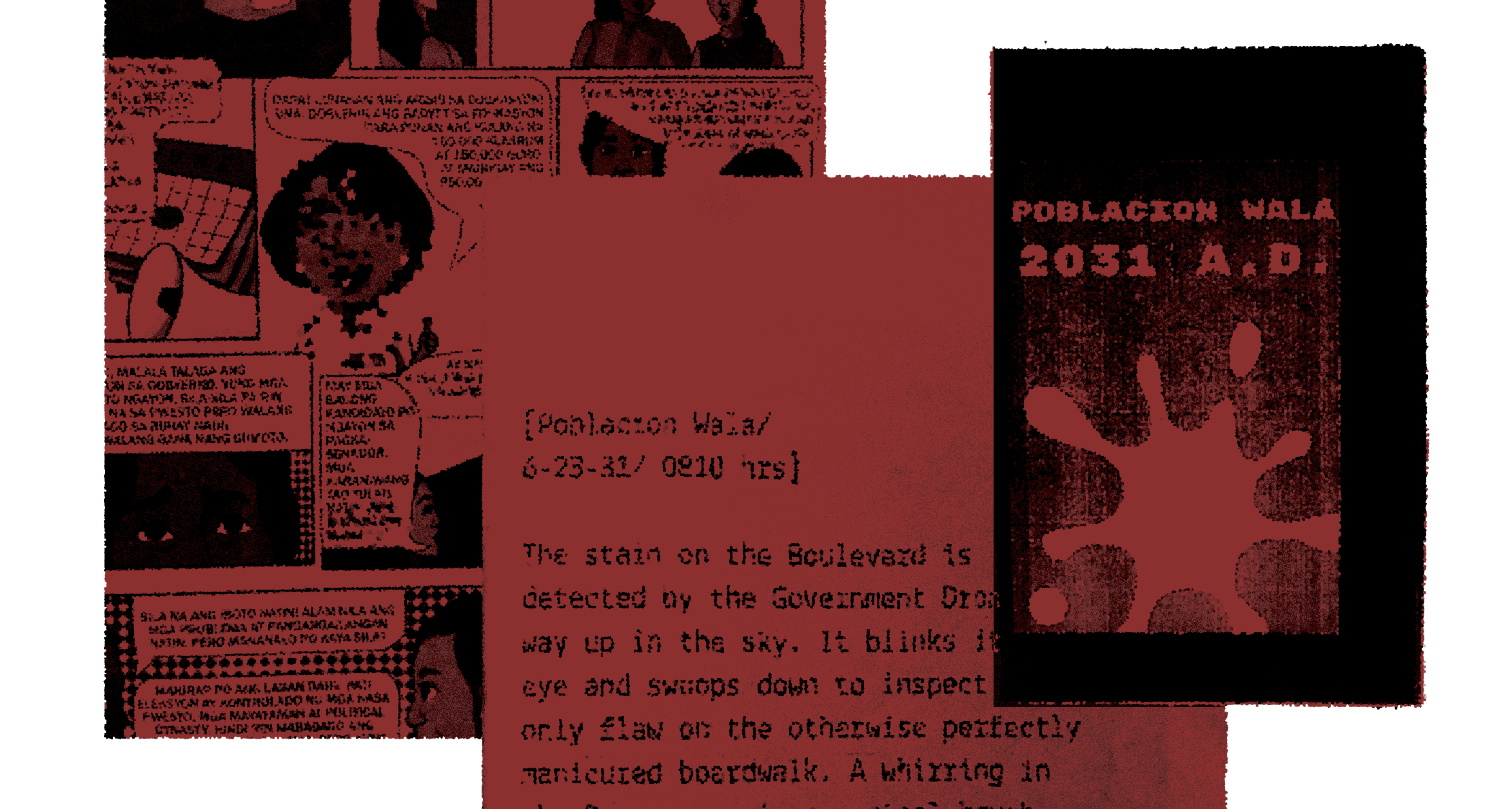
Countless heaps of wood, paper, and ink had been mounted to construct an edifice from the early years of my restless college life. In its assemblage was the design to interrogate or humiliate me, I’m sure of it. But the orchestrator behind it was nowhere to be found.
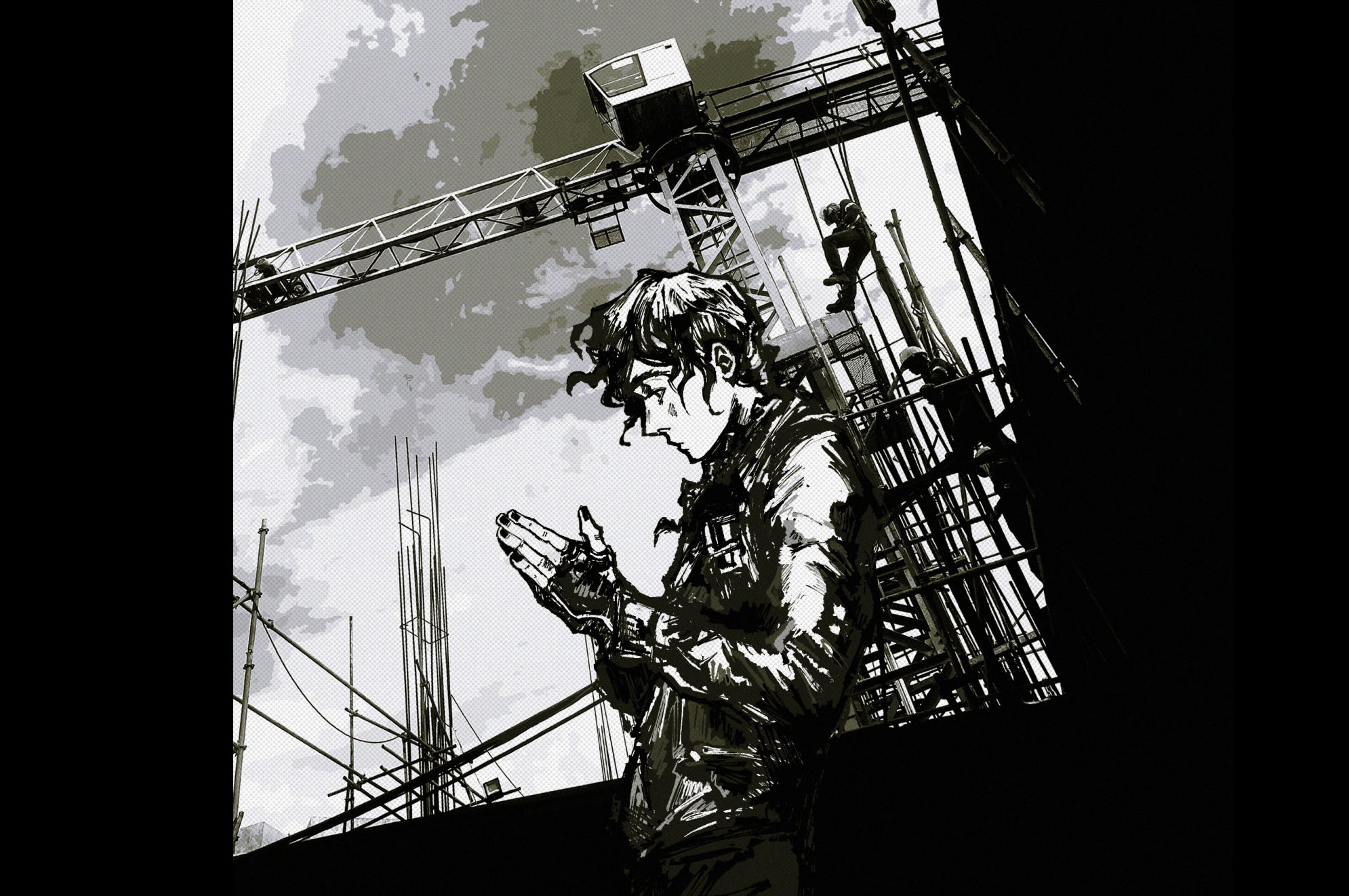
Third, it was probably that large crane. The hill I had described earlier was surely the largest one that stood, but it was far from being alone. Several similar piles of wooden chairs, tables, discarded books, chalk dust, and broken flagpoles—all in communion with the overwhelming stench of raw fish, salt, and iron—were from the command of a towering god. From afar, you could hear the roar of a slow beast whose steel neck made it seem as if a giraffe were grazing on skyscraper trees. Every shift in its movement was a sibilant noise, a crank then followed by a screech; a mimic of the mythical birds in primordial cave art. Creaaak…! And up went a god’s fistful of junk. Hisss…! And off went its machine hum. Crash! And down came a flood of armchairs, blackboards, copy machines, the viscera of a former institutional giant. Every repetition of this movement would cause the clutter to topple on each other, burying whatever was trapped at its col and forming the very hills that caught my attention when I first arrived to this shore. The sound would only continue to grow, and by now that familiar migraine will have appeared.
Fourth, it was definitely red. All of it, red—the color, the smell, the feel, as if everything were hot to the touch. Lingering in the air was a red daze, as heat waves paralleled with the crash of water meeting the shore. The trail of dead fish seemed to glare at me, as every one of their beady eyes appeared more like children’s marbles, the largest of which was that awful, invasive sun. Time had deadlocked the sun in this place to never set, only to sit at the edge in permanent, eerie glow. This image had burned into the back of my eyelids countless times as it greeted me in my sleep. A nauseating pulse of red would then swallow my senses, until the smell of the sea and its rot became indistinguishable from the scent of, what was it? Perfume? Ink? No, cigarette smoke, more like. That person, did they smoke the red kind, too? Before I can ever find out—fifth, there is always Bianca, shouting at me. That annoying Bianca, who never says my name right.
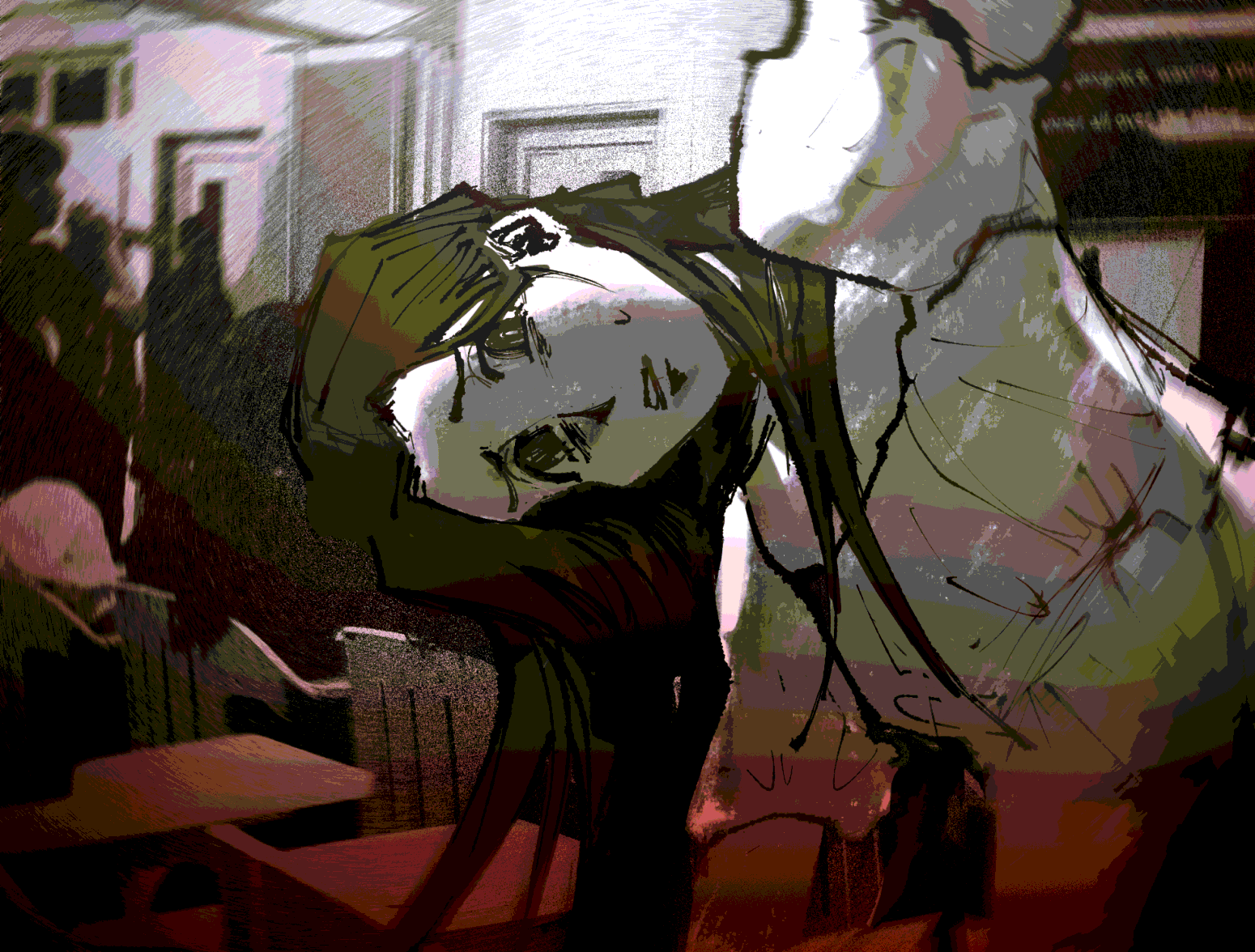
“Pim, hoy!” Always, that girlish shriek. “Pim, wake up!”
Pim
Ugh...Bianca. My head hurts.
Bianca
Pim! Sleeping during the lecture...God, Sir already hates you so much, and now that you couldn't answer his question...Pim
Question? What question?
I must have fallen asleep during our Children's Literature class. To be fair, Sir Kosatko drags his lectures on for too long...Bianca
He was asking why you decided to write about the Ethanol spill for our assignment. Something about it being too complicated?Pim
What's so complicated about a chemical spill? Tons of fishermen lost their jobs in Siba City. Was it the way I wrote about the dead fish?
Bianca looks at me funny, so I know I've missed a dire point. After stifling a laugh, her expression softened into something I've only seen in teleseryes. She's mastered the art of sympathy the way stepmothers do in those soap operas.Bianca
I get where you're coming from, Pim...it's admirable, really. Maybe Sir Kosa's just worried it'd be too much when we storytell it to the kids? I don't want to scare them, you know...!Pim
A pit grows in my stomach, gurgling and tasting like salt.
I think a child can understand something like the loss of a pet fish or going hungry, Bianca. Letter
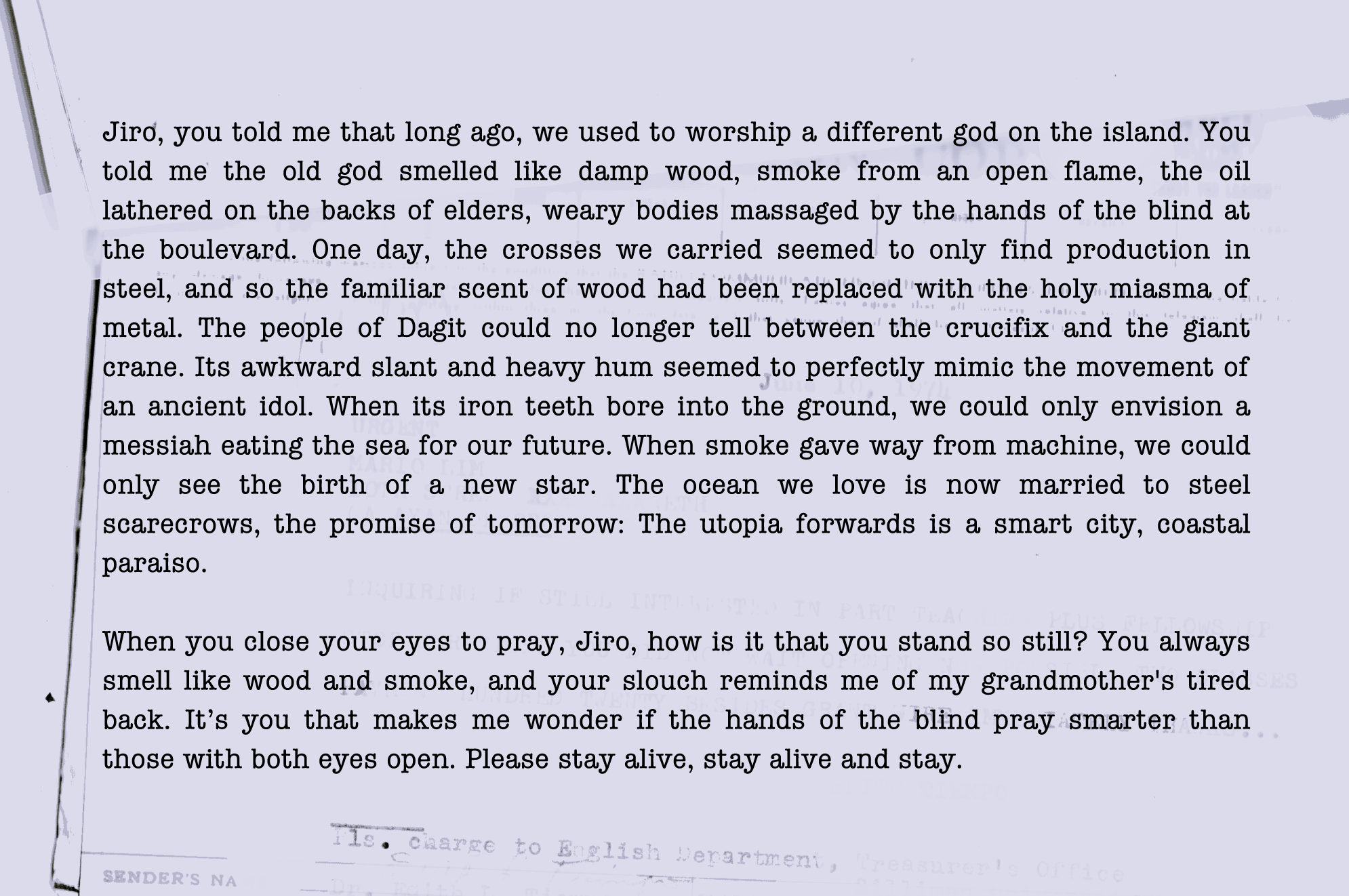
to Jiro